Abstract
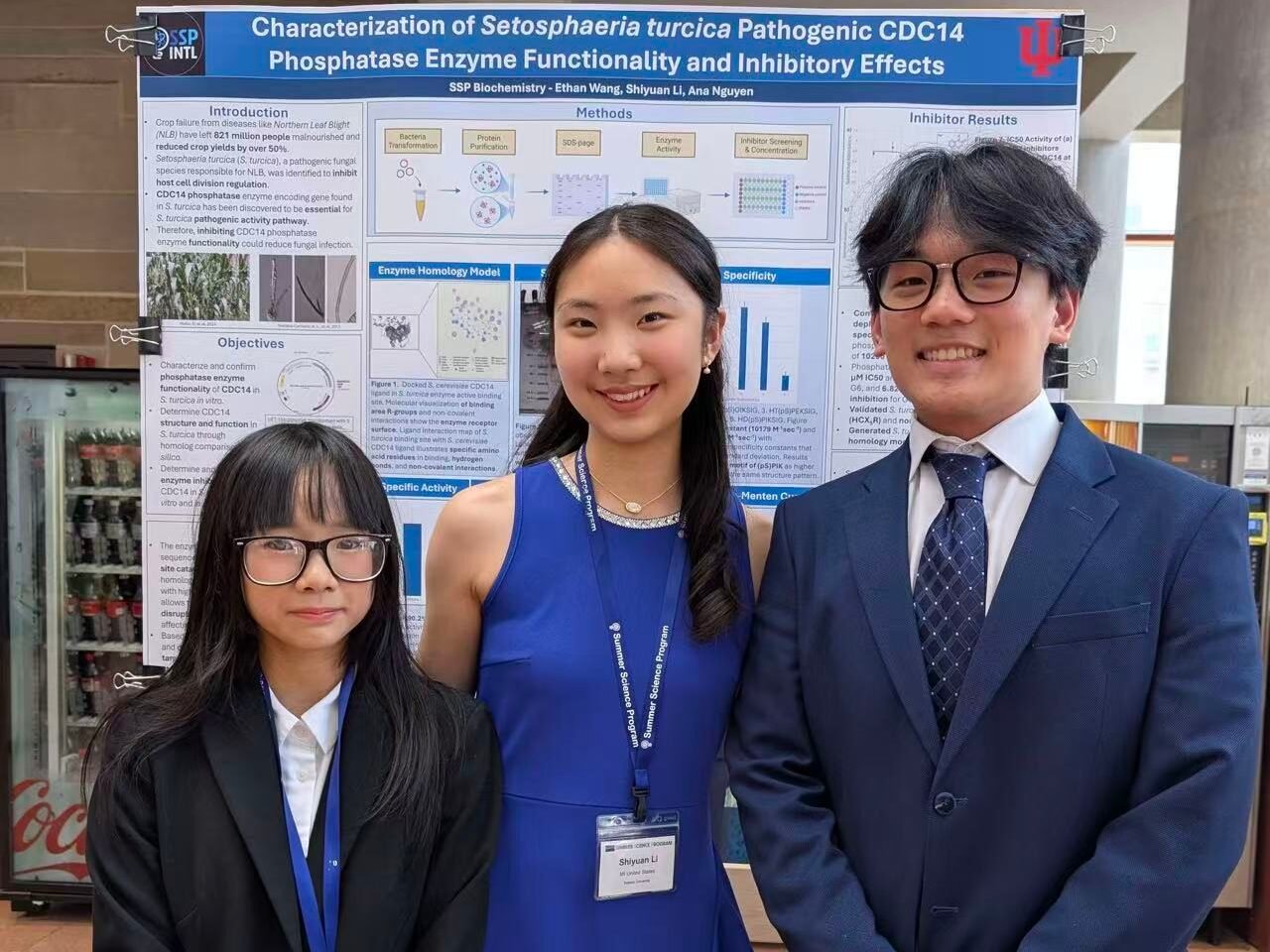
Northern Leaf Blight (NLB) is a crop foliar disease that infects corn and threatens agricultural production. Removal of a specific genetic coding sequence in Setosphaeria turcica, a fungal species responsible for NLB, results in non-virality and pathogenic infection inhibition. Translating this genome showed evolutionary links to Cdc14, a phosphatase conserved in pathogenic fungi. Therefore, we assume that by confirming the dephosphorylation activity of S. turcica Cdc14 (StCdc14), we can induce inhibitors to mitigate the pathogenic pathway of S. turcica that aligns with the interactions similar to phosphopeptide substrate motifs of {pS}PXK, and the active site catalytic domain motif of HCX5R. StCdc14 was transformed, expressed, and purified for in vitro use. Km of 36 ± 3 mM and a specificity constant of 5.9 ± 0.8 s-1/M for pNPP substrate was found at steady-state conditions. Enzyme activity assays revealed 90.2% inhibition with sodium tungstate, confirming competitive inhibition capabilities. Substrate specificity proved HT{pS}PIKKIG to have the highest specificity constant of 10200 ± 450 s-1/M, which aligned with our hypothesis of the substrate motif with highest affinity to StCdc14. 2′-hydroxy-1,1’–binaphthalene-3, 4-dione (G7) and sodium 3, 4–dioxo-3, 4–dihydro–1-naphthalenesulfonate (G6), were the best inhibitors from a predetermined library with percent inhibition values of 83 ± 9% and 40 ± 20%, with IC50 values of 5.05 ± 0.05 µM and 3.4 ± 0.8 µM respectively. In silico testing further supported inhibitor efficacy as the inhibitors showed minimal binding energies and retained amino acid residue interactions. Therefore, we conclude G7 to be the most effective inhibitor against StCdc14.