Abstract
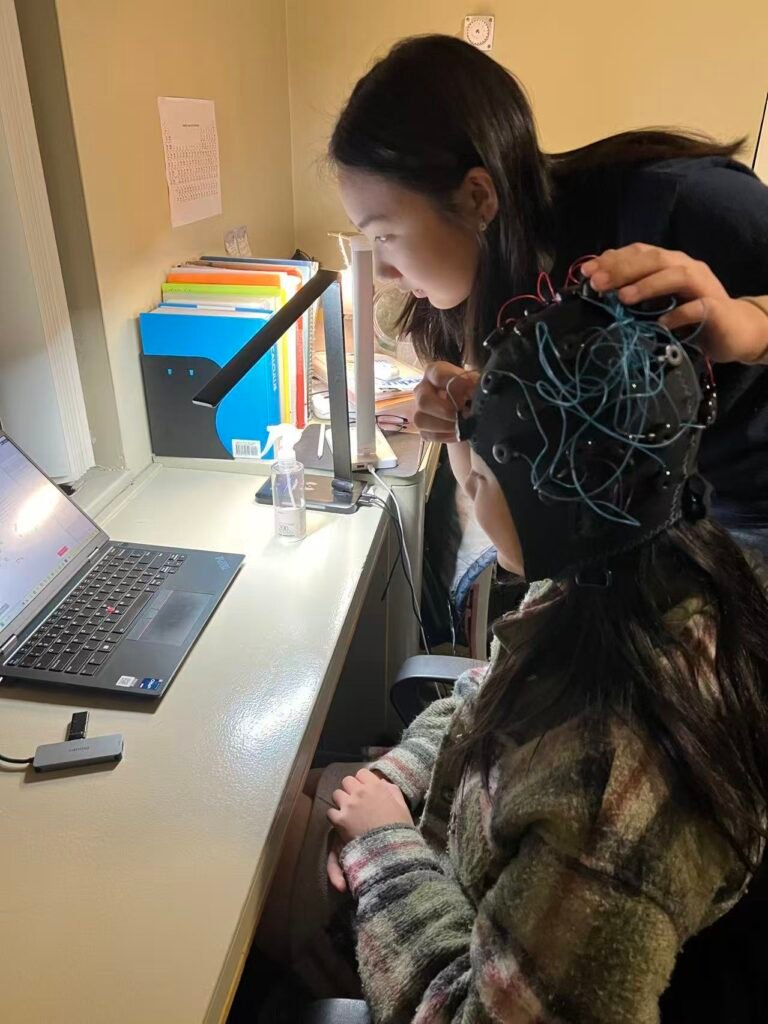
The combination of different frequency bands of neural oscillations is called the brain activity pattern. Adaptive change in brain activity pattern is the primary mechanism for motor learning. This study aims to discuss how the brain activity pattern changes after long-term motor learning. It is hypothesized that 1) specific motor experience will result in subjects producing more sports-related brain activity patterns; 2) long-term motor learning leads to more accurate predictions. Twenty-three subjects are divided into three groups: skaters, dancers and novices. All subjects performed a 10-minute eyes-closed sedentary, a 7.5-minute figure skating short program motor imagery and a 3-minute triple jump prediction while whole-brain electroencephalogram was simultaneously recorded. Microstate analysis was used to investigate brain activity patterns during resting and motor imagery in all three groups of subjects. During resting state (baseline), the frontoparietal network shows a balance in inhibitory and exhibitory activities. The frontal lobe is the most activated brain region during the motor imagery task for skaters. Correlation of spatial similarity shows that there is a resemblance between the microstate of dancers and novices, but t-test and repeated measures ANOVA shows that the duration difference is significant. There are no similarities between the brain activation patterns of skaters and the other two groups. One-way ANOVA showed that there is a significant difference in the accuracy of jump prediction among novice, dancers, and skaters. This study demonstrated that long-term motor imagery leads to better ability in action predictions and a task-specific change in brain activity patterns.